Books
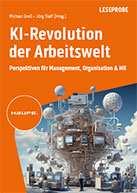
The AI Revolution in the Workplace
Artificial Intelligence (AI) is the defining issue of the future in nearly every sector of the economy. AI is already transforming the way we work and collaborate. Some professions and many job roles will disappear—and just as many new ones will emerge. The pace of change is unpredictable, but it is certainly faster than ever before.
This book explores potential applications in human resources and the prospective impacts on corporate organization. To this end, it brings together the key elements of the potential “AI Revolution in the Workplace”:
- 1. An overview of the opportunities and risks of AI in leadership and organizational management.
- 2. Insights for your work, for example on the use of AI in corporate management.
- 3. Recommendations for action and insights from practice.
Renowned authors have contributed, for example from DFKI and the Fraunhofer Institute, from SAP and Workday, REWE, and Zeiss Meditech. The contributions are structured into four parts: Strategies and Perspectives, Limits and Risks, Human Resources and Culture, and finally Practice and Examples.
You can find more about our solution for transformation through artificial intelligence at AI Management & Leadership.
Successfully Implementing Digital Transformation
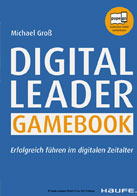
Digital leaders are distinguished by their combination of networking and openness as a defining mindset, and participation and agility as core competencies. They flexibly combine their methods and tools depending on the situation and needs. They bring together competencies, ensure transparency, and foster employee involvement in processes, extending to participation in decision-making.
Using the Digital Leader Canvas game board, readers can select the best moves for themselves depending on the situation and task. The gamebook offers significant practical value for successfully shaping digitalization in companies.
This is the gamebook
- Part 1 shows why corporate leadership must change in the age of digitalization and which traditional ways of thinking can be particularly hindering.
- Part 3 explains the unique mindset of digital leaders. A different attitude toward networking and openness makes it possible to act differently.
- Part 3 focuses on the skill set of digital leaders. The specific skills of participation and agility unlock new potential within companies.
- Part 4 demonstrates how to put this into practice as a digital leader. The foundation for this is the “Readiness Check,” which helps determine your personal starting point.
Everything Change Managers Need to Know
Nothing in today’s business world is as certain as change. Its triggers and effects can vary widely. One thing is certain: during change processes, managers and employees are faced with many questions. Change management provides the right answers.
This handbook outlines the necessary skills, attitudes, and competencies of a change manager. It explains how these can be learned and applied in typical corporate situations. Readers will gain the tools needed to analyze, design, and implement a wide variety of projects within organizations.

Reports
Making Decisions with AI
Executives are facing increasing complexity in their decision-making. It is becoming increasingly difficult to keep track of the numerous factors influencing decisions. The half-life of a decision is shrinking. AI can help—or even make decision-making more difficult.
One of the great hopes for AI is that it will help executives make better decisions faster. This is because AI operates purely on the basis of available data. However, AI does not review or question its own output (texts, photos, forecasts, comparisons, etc.) in the way that humans can.
This article shows how executives can use AI for their decisions—from data analysis to risk management. This also includes guidelines for human-machine collaboration and how to handle AI results.
No future without roots
Read more
Culture is key to integration
Read more
Culture as a Key to Success in M&A
Read more
More articles