Managing post-merger integration provides a high degree of flexibility in achieving the transaction's objectives
Management ultimately decides whether the Plan einer Post Merger Integration is successfully implemented and whether the intended benefits of a transaction are achieved—or not. Every program is unique, depending on the size and structure, background, and culture of the companies involved. However, the critical issues are often similar. The roadmap provides an overview of the starting points for the management of each Post Merger Integration, including when dealing with unplanned and unpredictable events.
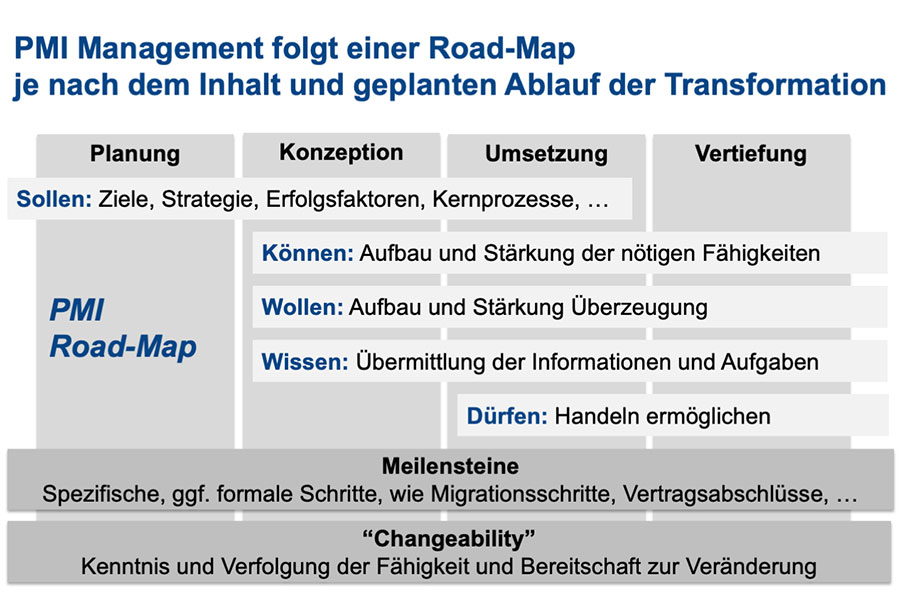
When it comes to managing post-merger integration (PMI), these five concepts define the key areas of focus needed to avoid falling into the complexity trap during a PMI. Each concept encompasses corresponding programs and measures that are managed holistically. Groß & Cie. provides consulting services or takes on project management in this context. As a neutral specialist, we are independent and do not pursue our own interests, unlike many other stakeholders within the companies.
Should – The goals, strategy, success factors, and core processes of the transformation were defined during the transaction and planning of the PMI. This results in the corresponding areas of work and their weighting for management.
Capabilities – The main focus in management. This concerns all operational changes to be implemented during the transformation, whether in production, sales, IT, HR, or ... . Since resources are always limited, management ensures that activities are prioritized and, if necessary, that priorities are adjusted when strategic changes arise “on the fly” or when unplanned external influences must be incorporated, such as technological leaps.
Knowledge – Skills must be imparted. Information and reflection on tasks and progress are fundamental, also to maintain the commitment of those involved. Communication within a post-merger integration is therefore more than just packaging, creating newsletters, or organizing workshops or conferences.
Will – Clarity about what needs to be done and knowledge of the necessary skills form a foundation, but they are no guarantee that those involved will actually support the transformation. In management, allies must be mobilized and activated quickly, also to counter the opponents of post-merger integration, who always exist and in the cultural Due Diligence are already becoming apparent do not gain the upper hand within the organization.
Empower – Finally, action must be made possible. In the management of a post-merger integration, this means delegating responsibility for change to managers and employees and tracking the results of the transformation. As new opportunities for shaping the future emerge, those affected are turned into active participants.
We would be happy to discuss the management of your post-merger integration. You can reach Managing Partner Dr. Michael Groß by cell phone at 0171 2428 624. Or send him an email.